Feudalism – a knight owed his lord military service in exchange for land, so he had to stay ready for war.
Practice for war – the tournament reduced real warfare and still kept the knight in training in case the real thing happened.
Chivalry – the knight's code prized courage and skill, shown off before the ladies and the lords in the stands.
Wealth – only the wealthy could afford warhorses, armor, and stands. Winners took the loser's horse and armor, or a ransom.
The Church – tried to ban tournaments (1130), but the knights kept on riding.
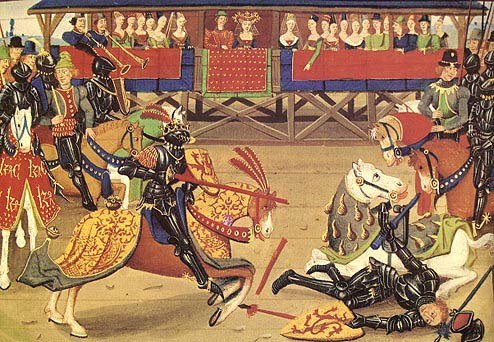
Sir John Holland and Sir Reginald de Roye – a medieval painting of the joust
The knight has become a symbol of the late Middle Ages, from about 1050 to 1350. During these times medieval civilization reached its height. The Church, the manor economy, and feudalism provided the solid foundations for this society.
Page → Squire → Knight
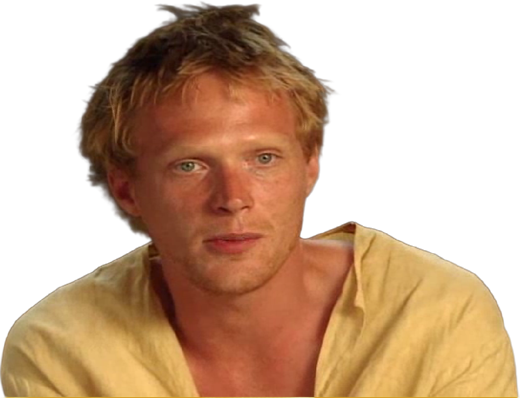
Geoffrey Chaucer
CHAUCER:
The Rules of the Joust
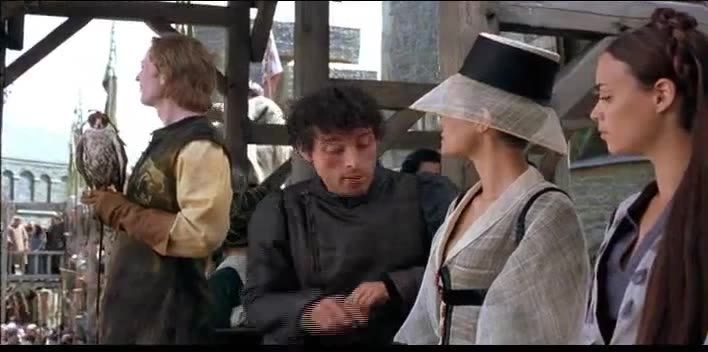
Watch the clip – the rule card changes as the joust goes on.
Copyright 2001 Columbia Pictures Industries, Inc - Making of A Knight's Tale
The Height of Medieval Times
Mouse over the armour or armor and the picture for more information.
🔈
Touch or mouse over a piece of armor, or something in the armory.
Copyright 1996 Dorling Kindersley - Castle Explorer
Compare the Knight to a Samurai
Knight
Samurai
Your score isYou missed
All cards placed! Click "How'd I Do?"
Directions:Drag the cards to the correct side. Then click the "How'd I Do?" button.